How Does Arsenic Sneak Into Our Bodies?
Arsenic isn’t something we willingly invite in, yet it finds its way into our bodies. Here’s how:
🚰 Contaminated Drinking Water – In some parts of the world, arsenic naturally seeps into groundwater. If your drinking water comes from a well or an unfiltered source, you could be unknowingly sipping on tiny amounts of this toxin. Not exactly the hydration boost we were hoping for!
🍚 Food (Especially Rice!) – Rice is like a sponge for arsenic because it’s grown in waterlogged fields, absorbing whatever is in the soil and water. If that water is contaminated, so is your bowl of fluffy rice!
🐟 Seafood & Other Crops – Certain fish, shellfish, and vegetables (like leafy greens) can contain organic arsenic. The good news? This type is generally less toxic. The bad news? Too much of it still isn’t great.
Why Does Rice Contain Arsenic?
Rice is basically an arsenic magnet. Unlike other crops, it’s grown in flooded fields, where arsenic dissolves in water and gets easily absorbed by the plant.
The U.S. Government Accountability Office notes that rice accumulates more inorganic arsenic than other food crops because of its physiology and cultivation methods
https://www.gao.gov/blog/2018/05/07/arsenic-in-rice
Which of these contains less Arsenic?
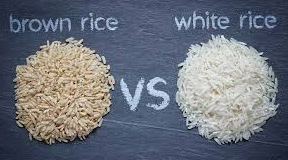
- Brown Rice
- White Rice
Answer: b) White Rice.
Do you know why?
Brown Rice: Contains higher levels of arsenic because the bran layer, which is retained in brown rice, accumulates arsenic.
White Rice: Has lower arsenic levels since the milling process removes the outer layers where arsenic concentrates
Myth Busted: Organic Rice can contain Arsenic!
Many people assume that switching to organic rice means saying goodbye to arsenic. Unfortunately, that’s not the case!
🌿 Organic farming bans synthetic pesticides and fertilizers, but it can’t remove arsenic from soil and water. Since arsenic is a naturally occurring element, it finds its way into both organic and non-organic crops.
🔬 The National Institute of Environmental Health Sciences confirms that arsenic exists in water, air, food, and soil, making it unavoidable—even for organic rice!
https://www.niehs.nih.gov/health/topics/agents/arsenic
So, while organic rice is great for avoiding chemical pesticides, it doesn’t solve the arsenic problem.