When to introduce water for babies?
When babies start solids, many parents wonder:
Is breastmilk enough? Do babies need water too?
Is Breastmilk Enough?
For the first 6 months, breastmilk or formula is completely enough for your baby’s hydration.
Breastmilk is made up of about 88% water, which means your baby already gets all the fluids they need.
Because babies’ kidneys are still developing, extra water is not recommended before 6 months. Giving water too early can even reduce milk intake.
What Happens When Solids Start?
Once babies begin complementary foods (around 6 months), small amounts of water can be introduced.
When solids enter the diet, water helps to:
- Support digestion
- Prevent constipation
- Help babies learn to sip from a cup
How Much Water Do Babies Need?
You don’t need to give large amounts. Just small sips during the day are enough.
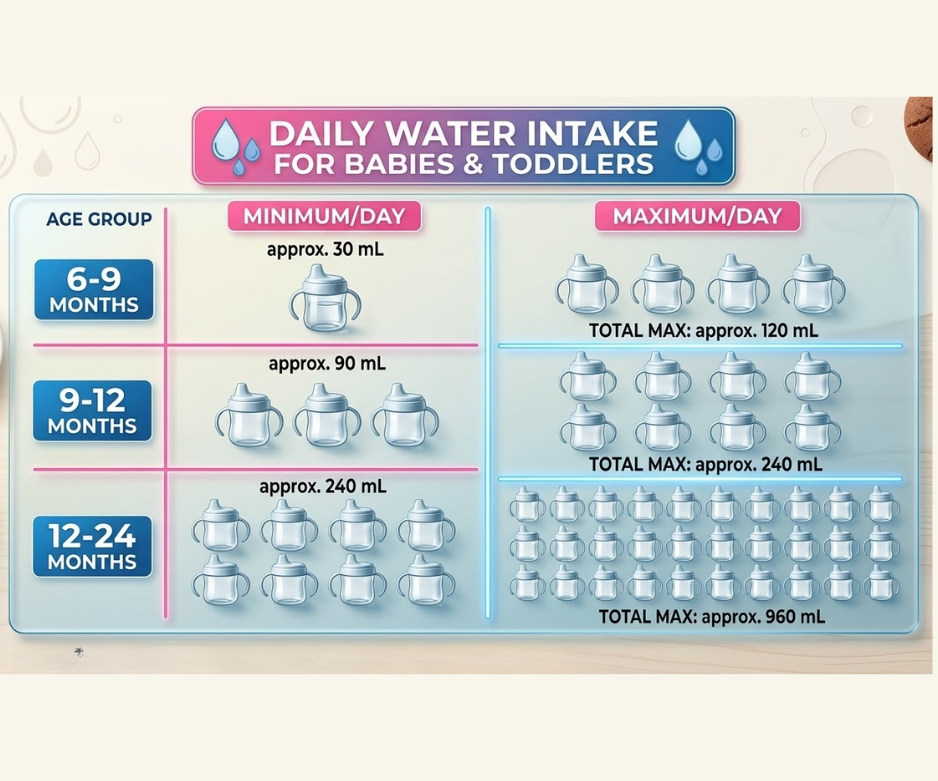
6–9 months
- Minimum: about 1 ounce (30 ml) per day
- Maximum: about 4 ounces (120 ml) per day
9–12 months
- Minimum: about 3 ounces (90 ml) per day
- Maximum: about 8 ounces (240 ml) per day
12–24 months
- Around 8–32 ounces (240–950 ml) per day depending on activity, weather, and diet
Offer small sips after meals or between feeds.
Which Cup to Use?
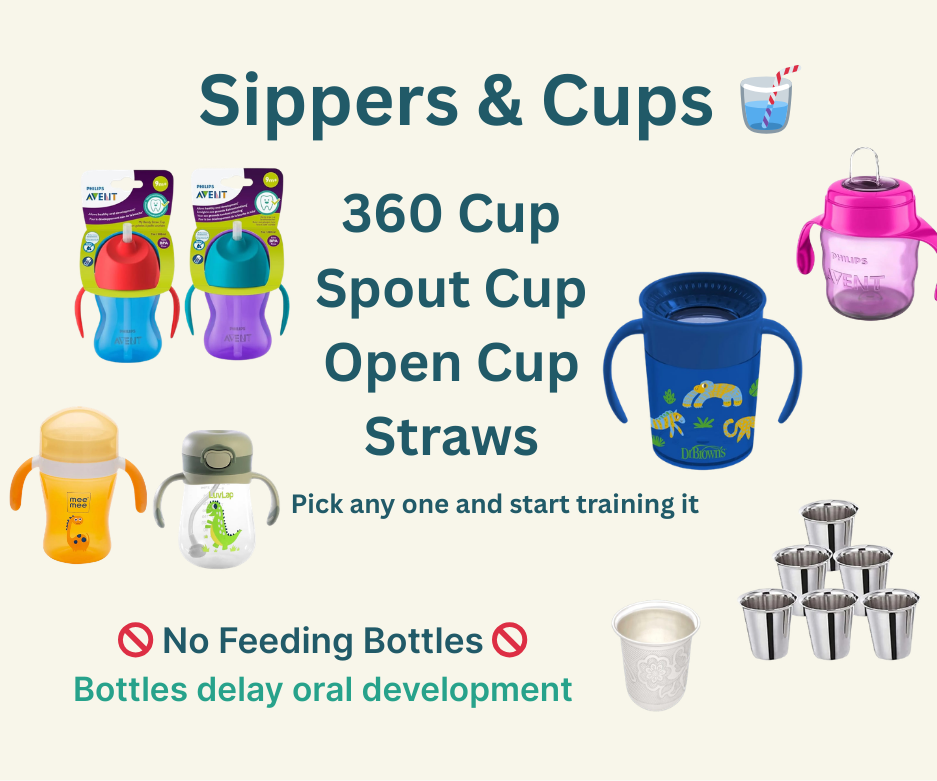
When babies start drinking water, parents often wonder which cup to use. The truth is, there isn’t just one “perfect” cup. Babies can learn with different types.
Some common options include:
- 360° Cup
- Spout Cup
- Open Cup
- Straw Cup
You can pick any one and start training your baby with it.
The important thing is consistency. If the baby doesn’t drink well in the beginning, don’t keep switching cups every few days. Learning to drink from a cup is a skill, and babies need practice and repetition.
Choose one cup, keep offering it regularly, and give your baby time to learn. With practice, they will figure it out.
🚫 No Feeding Bottles 🚫
Once solids begin and babies start learning to drink water, it’s better not to introduce water in feeding bottles.
Frequent bottle use can:
- Delay oral and speech development
- Reduce opportunities to practice drinking skills
- Make it harder to transition away from bottles later
Using cups helps babies develop better oral motor skills and encourages independent drinking.